Geotechnical Investigations
PH&C scopes the soil borings and reads the geotechnical report so rock, water, and fill quantities land in the budget.
What lies beneath a site is often the largest hidden risk in a development budget. Before a shovel hits the ground, PH&C leads a geotechnical investigation of the soils, rock, and groundwater that will govern how a project is designed, built, and priced. Doing this early is how we keep those conditions out of the change-order column.
Why geotechnical work matters
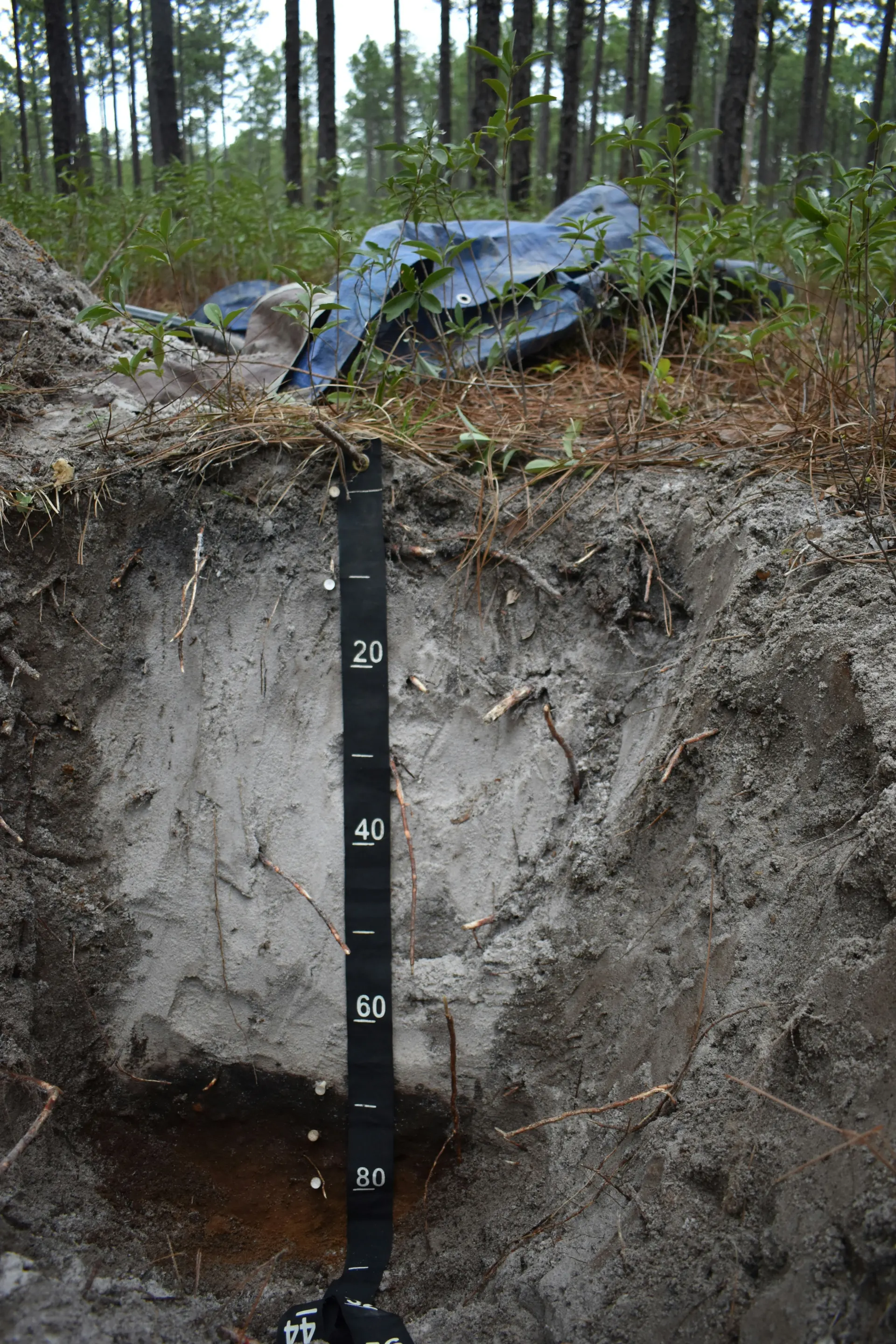
Structures, pavement, and utilities transfer their load into the ground. If the subsurface is weaker, wetter, or more variable than assumed, the consequences show up as change orders, redesigns, and schedule delays after the contractor has mobilized. A scoped geotechnical program turns those unknowns into design parameters with numbers on them. The report has to say how deep competent bearing material is, whether rock will require blasting, where the water table sits, and whether the on-site soils can be reused as structural fill or will have to be hauled.
What the investigation involves
PH&C coordinates a licensed geotechnical engineer to plan and execute a program scaled to the project’s size, structure type, and risk profile. A typical investigation includes:
- Soil borings and test pits positioned strategically across the building footprint, pavement areas, and utility corridors.
- Standard Penetration Testing (SPT) and, where warranted, cone penetration testing to characterize soil strength and density.
- Laboratory testing of recovered samples for classification, moisture content, compaction characteristics, and corrosivity.
- Groundwater monitoring to establish seasonal high water levels.
- Screening for problem conditions such as expansive or compressible soils, undocumented fill, organics, sinkholes and karst features, or contamination that overlaps with environmental due diligence.
The deliverable is a geotechnical report that provides allowable bearing pressures, recommended foundation types, slab and pavement subgrade preparation, lateral earth pressures for retaining walls, seismic site class, and guidance on excavation, dewatering, and earthwork. On complex sites we also recommend supplemental studies (infiltration testing for stormwater, additional deep borings for piles or piers, or geophysical surveys where karst or voids are suspected) so the design team has a number where the ground requires one.
How PH&C adds value
PH&C scopes the investigation to the questions that move the budget, places the borings on the real building program, and puts the findings into the design and the estimate. We fold the recommendations into the structural and civil drawings, the earthwork budget, and the construction schedule. Any condition with a real cost (deep foundations, over-excavation, undercutting, dewatering, or import fill) is flagged before the owner commits the next dollar.
Ordering the work during feasibility, before design is complete, leaves room to move the building, change the foundation, or pass on the site. That is the point of doing it before the architect has drawn the wrong footing.
Projects
18 projects